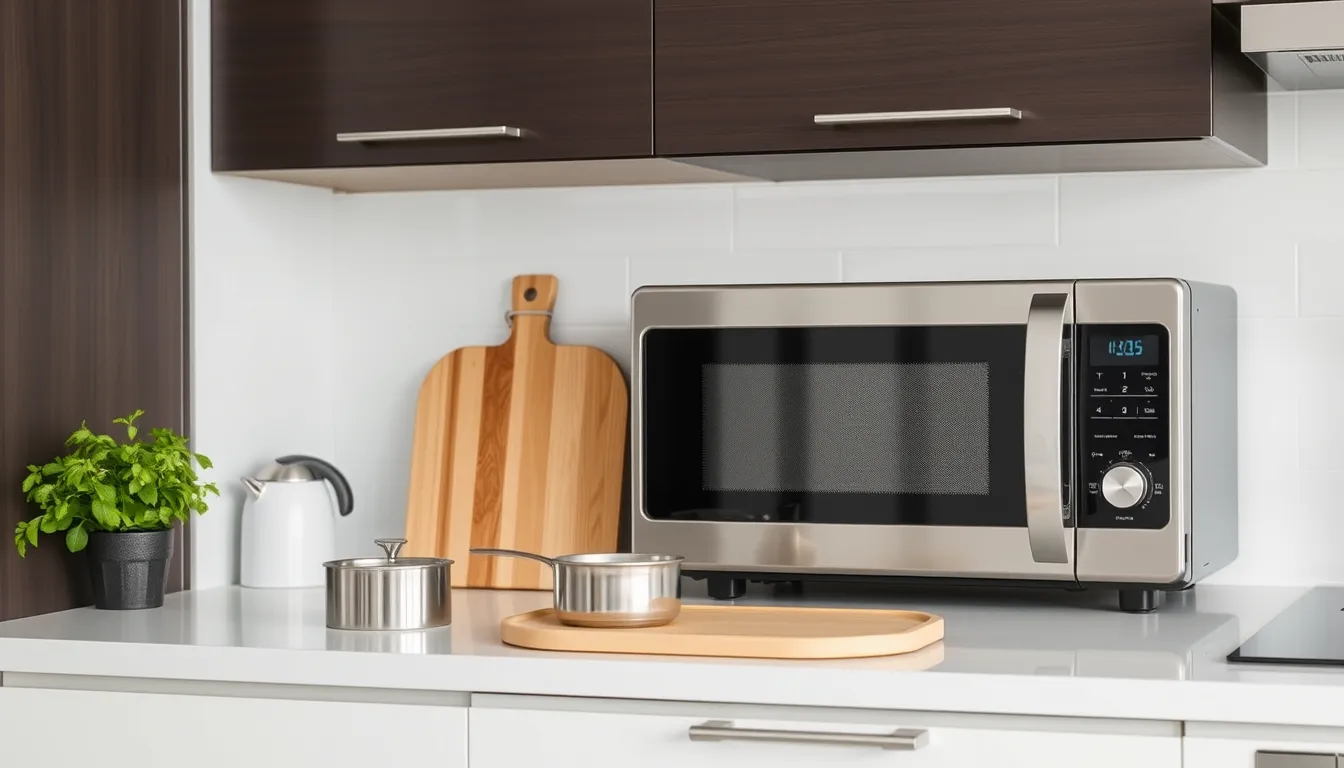
If you’re planning a new kitchen, swapping out an aging unit, or simply feel overwhelmed by the choices, this guide is for you.
You’ll walk through a logical sequence that starts with the fundamental microwave categories, then narrows to the right capacity and wattage, evaluates the most useful features, and ends with practical tips for safe, energy‑smart placement and installation. By the end, you’ll have a clear decision‑making path and the confidence to answer the question, How to Choose a Microwave for Your Kitchen, without getting lost in a sea of specs.
Microwave categories and where they belong in the kitchen
Countertop Models
Countertop units are the most versatile and affordable option. They sit on kitchen islands, shelves, or dedicated counter spaces. This style offers maximum flexibility; you can move the appliance to different rooms or borrow it from friends. The primary drawback is that it consumes valuable counter real estate. If your kitchen is small, a countertop microwave might clutter the workflow. However, if you have ample surface area, this type provides the easiest setup and removal process.
Over-the-Range (OTR) Units
Over-the-range microwaves mount above the cooktop, replacing the traditional wall-mounted vent hood. This installation saves counter space and integrates the microwave into the cooking zone. Many OTR models include a built-in exhaust fan, which requires proper ducting to the outside or through the home’s ventilation system. While they maximize vertical space, they often have smaller interior capacities than standard countertop models. They are ideal for kitchens where counter space is at a premium but require careful measurement to ensure they align correctly with the cooktop width.
Built-In Appliances
Built-in microwaves install flush within cabinetry, offering a seamless, integrated look. They typically offer larger capacities and more advanced features, such as convection capabilities, compared to OTR units. This style is best for larger kitchens with custom cabinetry. The main disadvantage is cost and complexity; installation requires professional help and specific cabinet modifications. Once installed, they are permanent fixtures, so you must be certain of your choice before proceeding.
Size and power: matching capacity and wattage to your cooking habits
Choosing the right interior capacity
Capacity refers to the interior volume where food is placed. To determine your needs, measure the dimensions of your largest dinner plates, baking dishes, and casserole pans. Add a small margin for clearance to ensure microwave safety and proper airflow. For single users or couples who primarily reheat leftovers, a compact countertop unit often suffices. Households with four or more members, or those who frequently cook full meals rather than just reheating, will benefit from larger capacities. Ensure the chosen size fits your available counter space or cabinet cutout without obstructing nearby appliances or creating a cluttered workflow.
Selecting appropriate wattage
Wattage determines the speed and evenness of heating. Higher wattage generally means faster cooking times, but it also requires adjusting recipe instructions. If a recipe is written for a specific output power, using a unit with different wattage may result in undercooked or overcooked food. Look for models that allow you to adjust power levels and time settings independently. This flexibility helps manage delicate items like fish or vegetables, which can become rubbery if heated too aggressively. Consider your typical usage: if you mostly reheat simple items, standard wattage is adequate. If you plan to cook complex meals or use recipes designed for high-power units, select a model that matches those requirements to achieve consistent results.
Features that affect convenience and results
Cooking aids: sensor and preset programs
Sensor cooking uses moisture or temperature detectors to adjust power automatically, reducing the need for manual timer adjustments. This feature adds real value when reheating leftovers of varying thicknesses, ensuring even heating without guesswork. Preset programs simplify common tasks like defrosting meat by weight or making popcorn. While convenient, these functions are not mandatory; manual control remains essential for precision cooking. A child lock is a critical safety feature for households with young children, preventing accidental operation or exposure to heat. Smart connectivity allows remote monitoring and recipe downloads via smartphone apps. This is beneficial for tech-savvy users who value integration with other smart home devices, though it is purely optional for standard kitchen setups.
Advanced options: convection and grilling
A convection microwave combines standard microwave heating with a fan-forced oven function. This dual capability allows for baking, roasting, and crisping foods that a standard unit cannot achieve. It serves as a space-saving alternative to a full-sized oven, particularly useful in compact kitchens or for finishing dishes. Grilling elements, often found in over-the-range or built-in models, add a top heating source for browning surfaces. This feature enhances results for dishes requiring a seared crust, such as pizzas or casseroles. Evaluate whether you actually bake or broil regularly. If your cooking habits are limited to reheating and simple steaming, these advanced options increase cost and complexity without providing daily utility. Choose these features only if they align with specific, frequent cooking needs.
Energy use, safety, and durability
Microwave efficiency extends beyond cooking speed. Standby power draws electricity even when the unit is off, adding to household energy use. Look for models with minimal display backlighting or automatic shutoff features to reduce this passive consumption. While Energy Star certification is not mandatory for every household, it often signals a design optimized for lower energy draw during operation and standby. Check the manufacturer’s energy guide label to compare estimated annual costs against other options in the same capacity class.
Safety relies heavily on the door interlock system. This mechanism prevents microwaves from leaking out if the door is opened during operation. Ensure the door closes firmly and latches securely without excessive force. A well-designed interlock should engage instantly, stopping the magnetron immediately upon opening. Additionally, inspect the interior coating. Modern microwaves often use porcelain enamel or easy-clean stainless steel liners. These materials resist staining and are easier to sanitize than older plastic interiors. Avoid units with flaking or chipped linings, as damaged surfaces can harbor bacteria and degrade over time.
Durability hinges on build quality. Inspect the control panel for sturdy buttons or a responsive glass touch interface, rather than flimsy plastic keys that may wear out. The turntable motor should operate smoothly without rattling. For flatbed models, check the waveguide cover for secure fitment. A solid, heavy chassis generally indicates better insulation and component protection. Prioritize brands with transparent warranty terms covering the magnetron and electronic components, as these are the most expensive parts to replace. Long-term reliability often correlates with simpler mechanical designs that have fewer points of failure.
Placement, installation, and ergonomics
Once you have selected the right capacity and wattage, determine where the unit will live. For countertop models, leave at least a few inches of space on the sides and rear for heat dissipation. Verify the cabinet height allows the door to open fully without hitting the countertop edge. Measure the exact width, depth, and height of your designated spot, remembering that handles and protruding buttons add to the overall footprint.
Over-the-range (OTR) microwaves serve a dual purpose, replacing a traditional range hood. These units require specific ductwork integration. You must connect the exhaust fan to either an external vent or a recirculating charcoal filter system. Ensure the mounting brackets are securely anchored into studs, not just drywall, to support the weight and vibration. Incorrect installation can lead to poor airflow, excessive noise, or safety hazards.
Wiring is a critical consideration. Most microwaves require a dedicated 120-volt circuit. If you are replacing an existing unit, the outlet should already be in place. However, if installing a built-in model or moving the unit to a new location, you will likely need a licensed electrician to install the proper outlet and GFCI protection if near water sources.
Ergonomics matter for daily use. The center of the control panel should align with your natural eye level when standing at the counter. This reduces neck strain when checking timer settings. If you are hiring a professional, ensure they handle the heavy lifting, precise leveling, and code-compliant electrical connections. A professional installer can also verify that the ventilation path is clear of obstructions, ensuring the unit operates at peak efficiency and safety.